

Research Mission
Cells of higher organisms such as plants and animals are divided into compartments by biological membranes. This allows different functions to occur efficiently and simultaneously in different parts of the cell. Each membrane is composed of a lipid bilayer and embedded proteins that perform a wide range of essential cellular functions. Channels and transporters control the transport of ions, lipids and metabolites. Signal transduction involves receptors that sense changes in the cellular environment to initiate specific cell responses. Dysfunction of the transport and signalling systems are associated with serious human diseases. Our aim is to reveal the molecular mechanisms of transport and signalling.
Current Research Projects
Cellular lipid transport by flippases
Lipids are essential regulators of membrane structure and function, with their asymmetric distribution maintained by lipid flippases, a class of P-type ATPases that actively transport specific lipids across membranes. Using cell biological, biochemical, and biophysical approaches, the molecular mechanisms of flippase-mediated lipid transport are investigated. A central focus is how these enzymes establish membrane asymmetry and how this contributes to cellular organization and function.
Molecular analysis of ATPases to single vesicle level
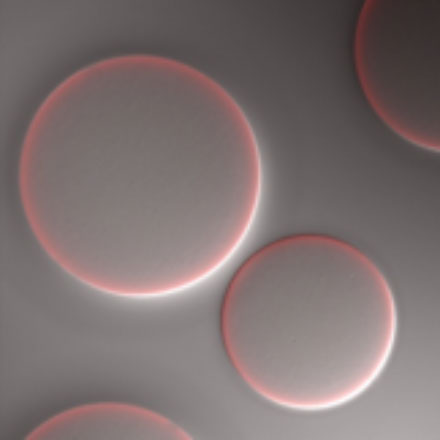
ATP-driven transporters are integral membrane proteins that play a central role in moving ions and lipids across cellular membranes, thereby controlling numerous cellular processes including vesicle biogenesis, cell signalling, morphogenesis, and migration. Reconstitution of the purified transporters into giant unilamellar vesicles allows us to study their activity in defined lipid environments by time-resolved fluorescence microscopy. The powerful combination of membrane protein chemistry and imaging techniques provides important new insight into the molecular characteristics, regulation, and working mechanism of these transporters as vital components of cells.
Research group Lipid Translocase Dynamics (Dr. Sarina Veit)
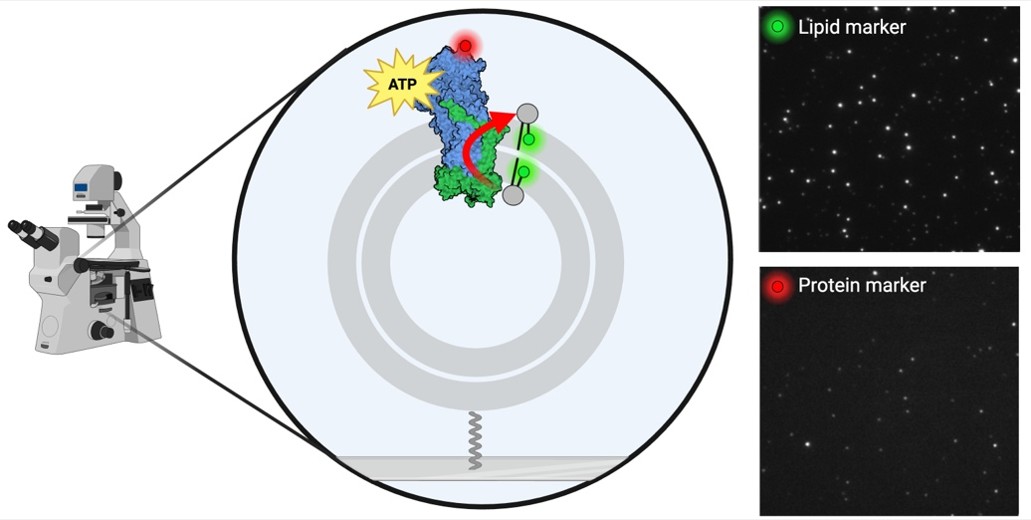
We investigate lipid translocases with a special focus on flippases from the human fungal pathogen Cryptococcus neoformans, a major cause of severe infections in immunocompromised individuals. Because lipid transport is closely linked to fungal virulence, our goal is to uncover the molecular mechanisms and regulatory principles that govern fungal flippase function. By combining transporter purification, reconstitution and ensemble assays with single-vesicle assays, we investigate how individual flippases function. We are especially interested in their regulation.
We use heterologous expression with affinity purification to obtain protein. These proteins are reconstituted in preformed large unilamellar vesicles to offer an enclosed membrane environment for further analysis like fluorometric activity assays. Furthermore, we investigate the translocase kinetics at the single vesicle level via TIRF microscopy with a home-written analysis algorithm.
Research group Protein Modification (Dr. Julia Kriegesmann)
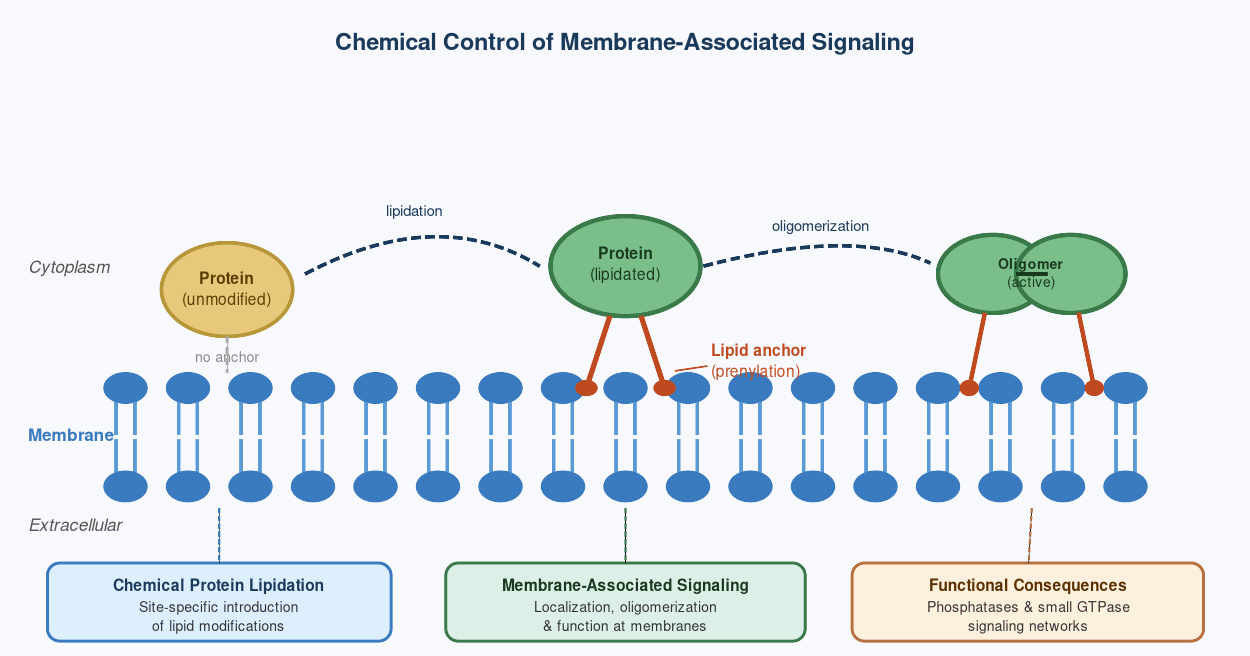
Proteins communicate through a complex network of posttranslational modifications that control their localization, interactions, and activity. Among these modifications, lipidation plays a central role in directing proteins to biological membranes, where many essential signaling processes take place. Despite its importance, the molecular mechanisms by which lipidation regulates protein function remain poorly understood.
Our research combines chemical biology, protein chemistry, and biophysical approaches to investigate how lipid modifications control membrane-associated signaling pathways. We develop novel methods to introduce lipid modifications into proteins with high precision and use these tools to study how lipidation affects protein structure, oligomerization, membrane interactions, and cellular function.
A long-term goal of our work is to uncover general principles by which lipid modifications regulate protein behavior and to establish new strategies for the chemical control of membrane-associated signaling networks.