
Professor Pimchai Chaiyen
School of Biomolecular Science and Engineering (BSE) and
Vidyasirimedhi Institute of Science and Technology (VISTEC), Thailand
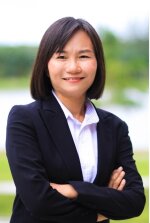
Pimchai Chaiyen is professor at the School of Biomolecular Science and Engineering (BSE) and President of Vidyasirimedhi Institute of Science and Technology (VISTEC), Thailand. Her research interests are in the broad areas of enzyme catalysis, enzyme engineering, systems biocatalysis, metabolic engineering and synthetic biology. Dr. Chaiyen’s lab team focuses on developing deep understanding insights into enzymatic mechanisms, discovering new and non-native enzymatic functions and re-routing of metabolic networks. In addition to studying in-depth basic science, Dr. Chaiyen also pursuits development of technologies and entrepreneurship from fundamental research. She has received numerous awards, including L’Oréal-UNESCO Thailand Crystal Award as the most accomplished Thai woman scientist (2017), National Outstanding Researcher Award (2012), and Thailand’s highest honor for science, Outstanding Scientist Award (2015). She was named in the Asian Scientists 100 list (2018) and serves as Associate Editor for the esteemed journal ACS Catalysis since 2021.
Professor John M Woodley
Technical University of Denmark (DTU)

John Woodley leads the Bioprocess Science group at the Technical University of Denmark (DTU). The group sits within the Department of Chemical and Biochemical Engineering, one of the largest Departments at DTU, and a leading center for chemical engineering research and teaching. John’s group works on the design of new bio routes to pharmaceuticals, fine chemicals and proteins, using fermentation and biocatalysis. In recent years’ the group has had a particular focus on oxidative biocatalysis, as well as studying enzyme stability under industrial conditions. The majority of the research is experimental, although this is also supported by modelling studies. The group has strong collaborations with other universities and especially industrial companies, exploring possibilities for bioprocess implementation and scale-up. Prof. Woodley is a Fellow of the Institution of Chemical Engineers (UK) and a Fellow of the Royal Academy of Engineering (UK).
Professor Andrea Mattevi
University of Pavia, Italy
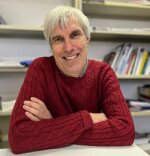
Andrea Mattevi studied biology. He received the PhD at the Department of Biophysical Chemistry, University of Groningen, The Netherlands under the supervision of Prof. Dr. W.G.J. Hol. He was then post-doctoral EMBO-fellow at the MRC Laboratory of Molecular Biology, Cambridge, UK in the group of J. Walker and A.G.W. Leslie. He is presently full professor in Molecular at the Biology Department of Biology and Biotechnology, University of Pavia, Italy. The general research theme of the structural - molecular biology group headed by Dr. Andrea Mattevi at the Dept. of Biology and Biotechnology of the University of Pavia is the structural, evolutionary, and chemical basis of enzyme catalysis and its mechanisms. Their work is addressing the investigation of medically relevant enzymes with interesting mechanistic properties, such as complex multifunctional systems, proteins performing unusual catalytic functions, and, more recently, intact metabolons encompassing entire metabolic pathways. The research integrates biochemical, structural, and computational methods to investigate protein- and enzyme-based molecular mechanisms, with the goal of leveraging this knowledge for therapeutic development.
Dr. María Fátima Lucas
CEO at Zymvol, Barcelona, Spain
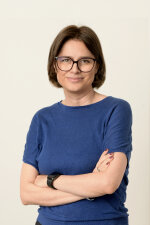
María Fátima Lucas holds a PhD in Quantum Chemistry and worked at the Barcelona Supercomputing Center for 9 years where she developed physics-based simulation approaches to understand and predict enzyme activity, selectivity, and stability.
She is the founder and CEO of Zymvol, where physics- and AI-driven enzyme design technologies are successfully applied to real-world biomanufacturing challenges across pharma, chemicals, and materials.
She is a recipient of the EU Women Innovators Prize for democratizing green chemistry and enabling broader access to sustainable biocatalysis.
Copyright © OxiZymes 2026
Last update: Jan 15, 2026
