
Home

RUB » Department of Philosophy » Philosophy of Language and Cognition

Welcome at the Chair of Philosophy of Language and Cognition

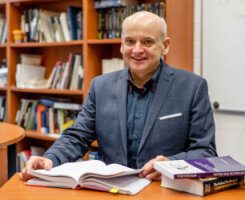
Univ.-Prof. Dr. Markus Werning

Department of Philosophy
Ruhr University of Bochum
Universitätsstraße 150
Room GA 04/43
44780 Bochum, Germany

Phone: +49-(0)234-32-24734
Fax: +49-(0)234-32-14463
Secretary: +49(0)234-32-26739
Email: markus.werning@rub.de

Office hours (lecture period): Tuesdays, 15:15-16:00.


News

Investigating Semantics: Empirical and Philosophical Approaches

The call for papers for InSEMP2013 (Bochum, 10th-12th October 2013) is now open. Organization: Erica Cosentino, Dirk Kindermann, Max Kölbel, Maria Spychalska, and Markus Werning.

Special issue of the Journal of Semantics

The special issue edited by Christian Horn, Sebastian Löbner and Markus Werning is devoteted to Semantic Contributions to a Theory of Concepts. Date of Appearance: 1 November 2012.

Semantics and Philosphy in Europe 6

The call for papers for SPE6 (St. Petersburg, Russia, June 10-14, 2013) is now open. Organization: Berit Brogaard, Tatiana Chernigovskaya, Wolfram Hinzen, Robert Matthews, Robert May, Friederike Moltmann, Natalia Slioussar, Markus Werning, and Ede Zimmermann.

CV and Publications

Selected Journal Articles

Philosophy of Mind and Language/Philosophy of Linguistics

Horn, C., Löbner, S., & Werning, M. (2012). Semantic Contributions to a Theory of Concepts - Preface. Journal of Semantics, 29(4), 439-43. [doi]

Werning, M. (2010). Complex first? On the evolutionary and developmental priority of semantically thick words. Philosophy of Science, 77, 1096–1108. [local]

Werning, M. (2010). Descartes discarded? Introspective self-awareness and the problems of transparency and compositionality. Consciousness and Cognition, 19(3), 751–61. [doi, local]

Werning, M. (2008). The complex first paradox why do semantically thick concepts so early lexicalize as nouns? Interaction Studies, 9(1), 67–83. [doi, local]

Werning, M. (2005). The temporal dimension of thought: Cortical foundations of predicative representation. Synthese, 146(1/2), 203-24. [doi, local]

Werning, M. (2004).Compositionaltity, context, categories and the indeterminacy of translation. Erkenntnis, 60, 145–78. [doi, local]

Epistemology

Werning, M. (2009). The evolutionary and social preference for knowledge: How to solve Menon’s problem within reliabilism. Grazer Philosophische Studien, 79, 137-56. [doi, local]

Neurophilosophy/Theoretical Neuroscience

Cheng, S. & Werning, M. (2013, accepted). Composition and Replay of Mnemonic Sequences: The Contributions of REM and Slow-wave Sleep to Episodic Memory. Behavioral and Brain Sciences.

Mroczko-Wąsowicz, A. & Werning, M. (2012). Synesthesia, sensory-motor contingency and semantic emulation: How swimming style-color synesthesia challenges the traditional view of synesthesia. Fontiers in Psychology, 3(279). [doi]

Abraham, A., Rakoczy, H., Werning, M., von Cramon, D. Y., & Schubotz, R. I. (2010). Matching mind to world and vice versa: Functional dissociations between belief and desire mental´state processing. Social Neuroscience, 5, 1-18. [doi]

Abraham, A., Werning, M., Rakoczy, H., von Cramon, D. Y., & Schubotz, R. I. (2008). Minds, persons, and space: An fMRI investigation into the relational complexity of higher-order intentionality. Consciousness and Cognition, 17, 438–50. [doi, local]

Maye, A., & Werning, M. (2004).Temporal binding of non-uniform objects. Neurocomputing, 58–60, 941–8. [doi, local]

Werning, M. (2003). Ventral vs. dorsal pathway: the source of the semantic object/event and the syntactic noun/verb distinction. Behavioral and Brain Sciences, 26, 299–300. [doi, local]

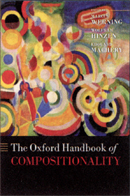
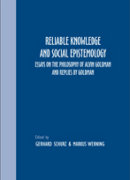
Recent Books and Special Issues